
TSMG28
-
Posts
667 -
Joined
-
Last visited
-
Days Won
20
Content Type
Profiles
Forums
Gallery
Everything posted by TSMG28
-
Please Help me identify this drum
TSMG28 replied to Grease Gunner's topic in Thompson Submachine Gun Message Board
That is a third generation (latest) Kahr drum. The spot welding is definitely Kahr, and the front faceplate places it as 3rd gen. Roger -
1921a neoprene buffer source?
TSMG28 replied to snipershot1944's topic in Thompson Submachine Gun Message Board
The polyurethane that PK uses is a custom fit job. In the past, he has asked for you to send him your 1921 guide so that he can guarantee the proper fit/function. As far as I know, he is the only source for these. -
I agree with TD’s assessment across the board. It does appear to have been refinished. Probably made circa 1929-1930.
-
Oversized Thompson Display with Brass receiver
TSMG28 replied to Bauer's topic in Thompson Submachine Gun Message Board
Bauer, Is it possible to get more pics of both sides of the gun? The wood appears to be walnut and/or beech. Is that correct? The only brass guns I have seen in the past were the Turkish standard size ones made in Cyoress in the 1960’s. I published an article about those in Small Arms Review. This gun does not appear to have any of those features, so for now I doubt it is related. Roger -
UPDATE 3: Merle .22LR Conversion Kits
TSMG28 replied to TSMG28's topic in Thompson Submachine Gun Message Board
A few people are encountering failure-to-fire/light firing pin strikes with the lighter Merle springs sent with the kits. I tested those springs successfully in several guns, but every gun responds to these kits differently. If you get FTFire or light FP strikes, try a standard .45ACP spring. It should fire each round, but will likely be too strong to allow the bolt to extract that round and feed another. As listed in the instructions, clip ~1/4 inch at a time off that spring until the gun runs reliably. Feel free to reach out to me concerning this or other issues. Roger -
UPDATE 3: Merle .22LR Conversion Kits
TSMG28 replied to TSMG28's topic in Thompson Submachine Gun Message Board
Ryo, The best I can offer is hopefully yes. You are on my second list, waiting on some parts. Once those parts are completed, I will match the bolts to existing barrels. If I can find or engineer enough matches, I will be able to supply kits to the names remaining on my second list. As I have mentioned before, I have found that everything needs to be custom fit and matched. At this point, matching bolts and barrels is the key determining factor. Stay tuned. I will contact everyone via Email as things progress. -
UPDATE 3: Merle .22LR Conversion Kits
TSMG28 replied to TSMG28's topic in Thompson Submachine Gun Message Board
Pstidan, Merle made all of the design changes to the Ciener .22 adapter, and did all of the engineering. As far as I know, all of the components of all of the kits were actually made or subcontracted by Merle. He needed box and drum mags for the kit, and contacted Black Dog to work with him. His first box mag was a modified Black Dog AR-15 mag. He also came up with the changes necessary to the PPS50 drum to be used with the Thompson. As I understand, PK is the one who came up with the way to cut the slot for the .45 ejector, but I know that Merle is the person who cut the slot in my original barrel. He created special jigs to allow him to make the cuts on his mill. I recovered that jig. Black Dog used his box mag example to design their own box mag, but they never offered the modified PPS50 drum or mounting adapter. As part of Merle’s work with them, Black Dog also sold his early kits. Merle later sold the kits directly. He handled everything for the later kits. All of the parts in the current kits came from Merle’s basement. -
UPDATE 3: Merle .22LR Conversion Kits
TSMG28 replied to TSMG28's topic in Thompson Submachine Gun Message Board
Mike, The barrel insert does not appear to be rotated 30 degrees. The .45 ejector is at the back of the top groove in the barrel. Rotating the insert counterclockwise allows the .45 ejector to line up with the lower groove so that the barrel can be moved forward into the chamber. Once the insert clears the .45 ejector, you rotate it back so that the .22 feed ramp is at the top (bottom of the receiver). -
Doug Richardson TSMG barrel tool value
TSMG28 replied to Frank Iannamico's topic in Thompson Submachine Gun Message Board
Frank, You are missing the grip mount retainer for the receiver vise. Doug ran out of the retainers before he ran out of vises. Since mohawk64 made these as recently as 2022, I would guess his pricing would be the standard. Back then, the receiver vise with grip mount retainer was $220, and the universal wrench was $250. Both were including shipping. I would guess $450-$500 shipped is a reasonable price range today considering the missing component, but YMMV. I don't know how the run-up in prices these past two years would affect the final costs today. The original cost for the vise without retainer was $145, and the wrench was $95, but that was a long time ago. The retainer cost $65 originally. BTW, those grip mount retainers are not hard to make, but a potential buyer should first contact mohawk64 to see if he could sell them one. FWIW- 1 reply
-
- 1
-

-
UPDATE 3: Merle .22LR Conversion Kits
TSMG28 replied to TSMG28's topic in Thompson Submachine Gun Message Board
One thing I forgot to tell everyone that has bought the kits - the plexiglass cover on your kits has protective film on the front and back. Feel free to remove that once you receive your kit. I chose to leave it in place to protect everything during shipping. You will also note that the cutout in the kit box does not easily fit the 1928 actuator when installed in the bolt. I believe Merle had these cases routed out before he came up with his improved actuator design, and the improved design moved the actuator knob back a bit on the bolt. If you want to be able to leave your 1928 actuator in place in the bolt when storing it in the kit, you need to open up that wood cutout a little bit toward the rear of the bolt. I was not set up to do that mod. -
UPDATE 3: Merle .22LR Conversion Kits
TSMG28 replied to TSMG28's topic in Thompson Submachine Gun Message Board
Brad, If Merle had drawings, we did not find them. I doubt he bothered. We have to reverse engineer the parts that I am having made. As far as I know, Merle made most of the parts himself, though I know he farmed out a few, like the ejectors. I met the man who made those for him. Merle made his first batch out of stainless steel, but he soon found those were too easily bent in use. The second batch were made out of spring steel. We found the plates the ejectors were cut from. -
UPDATE 3: Merle .22LR Conversion Kits
TSMG28 replied to TSMG28's topic in Thompson Submachine Gun Message Board
TD. and mgvince, Not sure that I qualify yet as the Drum Doctor. If I ever get Merle’s spring repair going, then I will be the new Drum Doctor. The PPS drums are finicky, but nothing like real C and L drums. On the other hand, Conversion Kit Doctor is appropriate. I now know more about these kits than I ever expected to (or wanted to), and I’m still learning. Just wish I had Merle’s machining experience and tools so that I could move things along more quickly. -
UPDATE 3: Merle .22LR Conversion Kits
TSMG28 replied to TSMG28's topic in Thompson Submachine Gun Message Board
bradhe, I have a very limited supply of Merle’s adapters, so they are only being sold one to a customer to those buying kits. I hope to have more made, but we don’t yet know when or the cost. Once more are made, I will notify everyone. -
UPDATE 3: Merle .22LR Conversion Kits
TSMG28 replied to TSMG28's topic in Thompson Submachine Gun Message Board
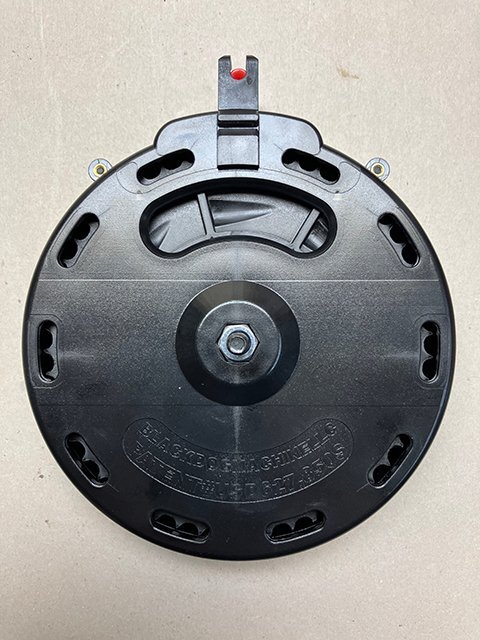
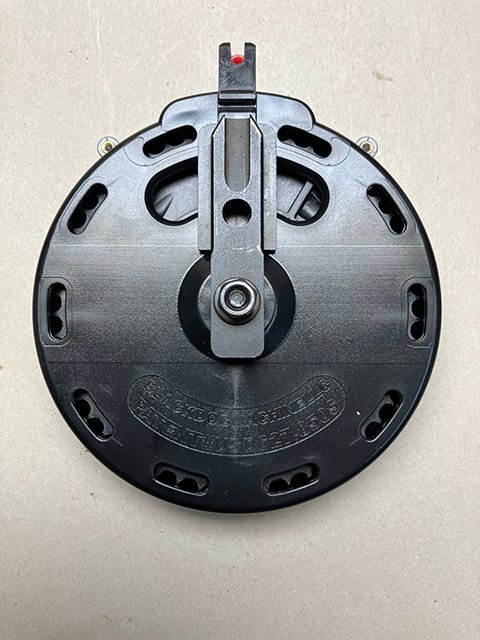
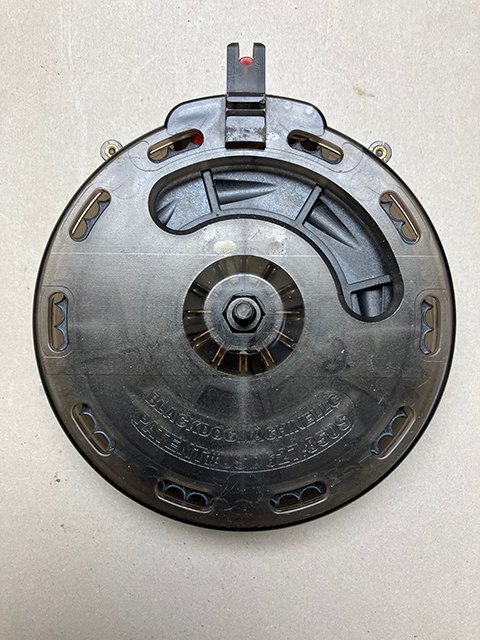
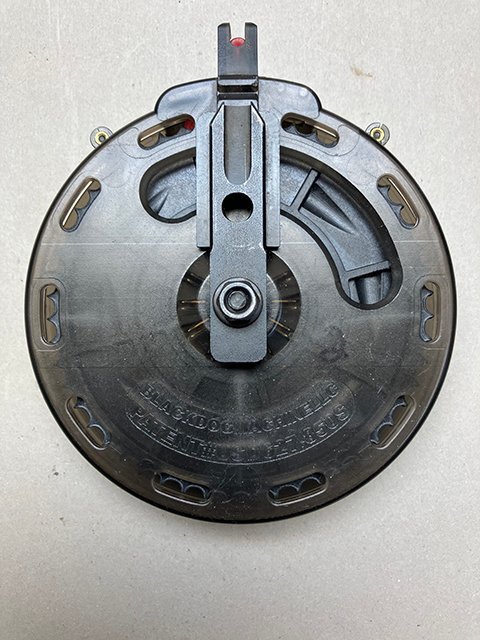
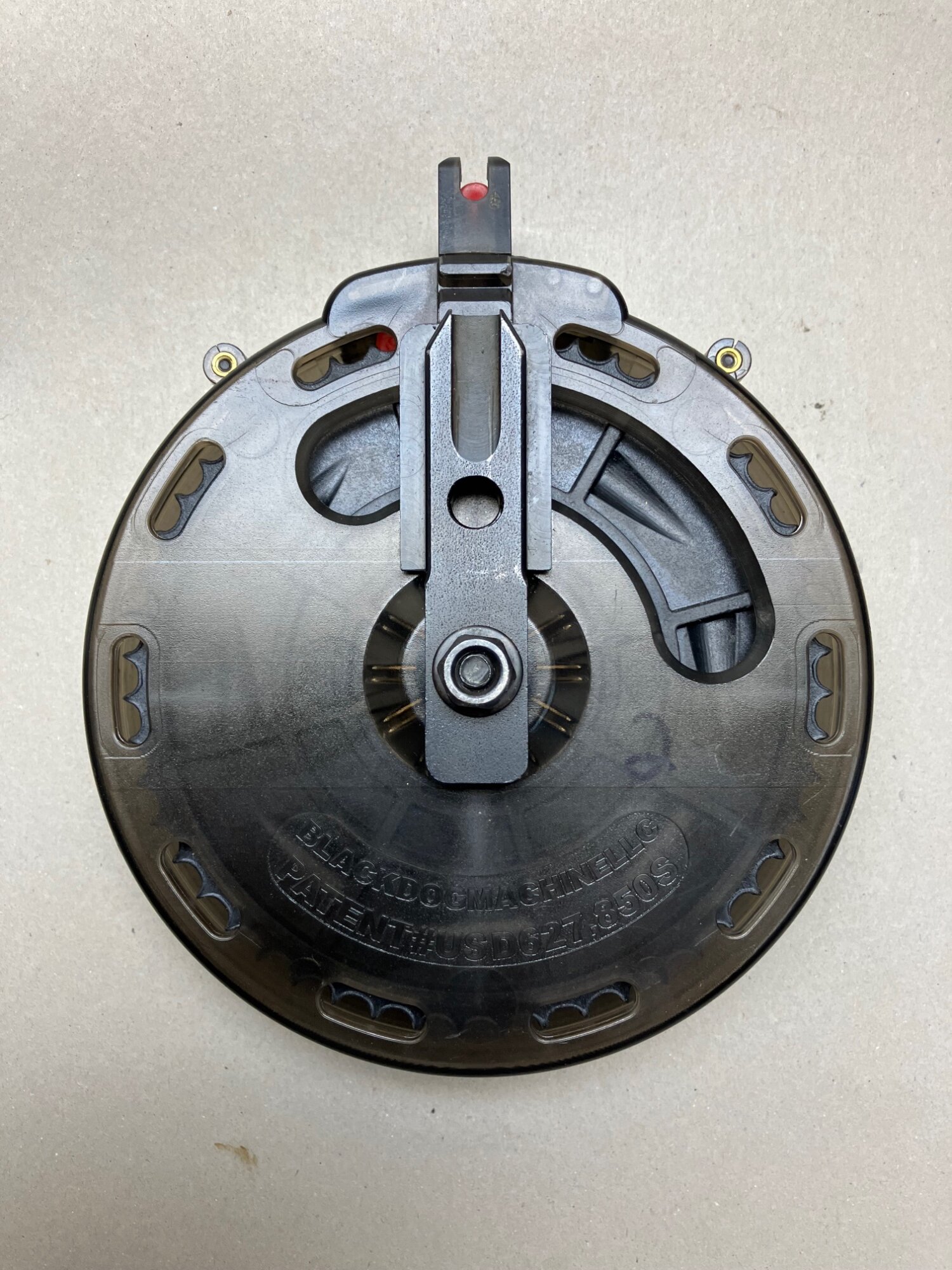
I have received some questions about the elongated loading slot on the drum magazines. Below are pics to help answer any questions. I will not have the tooling needed for the slot elongation set up for a couple months. Drum with standard loading slot on back. Drum with standard loading slot and TSMG adapter installed. Drum with elongated loading slot. Drum with elongated loading slot and TSMG adapter installed.
-
UPDATE 3: Merle .22LR Conversion Kits
TSMG28 posted a topic in Thompson Submachine Gun Message Board
I now have 22 bolt/barrel combinations tested successfully, and expect to have the proper size barrel nuts in hand in the next few days. The modified bolts and barrel nuts will still need to have some touch-up bluing work, but I hope to be assembling the first 22 kits in the next 2-4 weeks. I will be sending individual Emails to each of the first 22 people on my original request list for you to confirm that you still want the kit, and to provide you payment information. I will also need to know how many magazines you want with each kit. Work continues to get an additional three kits tested successfully to fill the orders on my first list. In the next 3-4 weeks, I hope to have information on the manufacture of the parts needed to complete the kits on my second list. In addition to the parts needed, one limiting factor on those kits will be the bolt/barrel match-up. I have a limited number of barrels, and I have discovered that the alignment of the installed barrels varies a bit, so I need to match each bolt to each barrel. I still expect to be able to fulfill those waiting on my second list. As these additional kits are completed, I will be contacting each person on the list via Email to verify and complete the sale. For those who have requested additional parts, such as ejectors or extractors, I will not be selling any of those parts until I can confirm that I have enough to complete entire kits for those who have requested them. I still have you on my original list, and I do expect to be able to make those parts available, but my availability may be limited to one of each part in some cases. Thanks to all for your patience. The saga continues... Roger -
UPDATE 2: Merle .22LR Conversion Kits
TSMG28 replied to TSMG28's topic in Thompson Submachine Gun Message Board
Well, the Merle saga continues... I was able to assemble 25 bolts for testing. Each one required hand fitting of nearly all of the parts. I tested the bolts in three different guns - a Colt, an AO 1928, and a Savage M1. Only one of the bolts worked in all three guns. Another worked in the WWII guns, but not the Colt (tighter tolerances). The rest of the bolts would not work in any of the guns. I believe I have identified both problems with the bolts and made a mod to several of them for further testing. I also discovered that Merle cut nearly all of the barrel retaining nuts, both short and long, to an outside diameter that will not insert into a barrel. This will hopefully be an easy fix once I have access to a lathe, but it also means more delays. I am struggling to understand why Merle manufactured nearly all of the components slightly oversized, requiring machining of each part for assembly of the kits. Perhaps he just had not yet gotten to the final manufacturing step on each part. Stay tuned... Roger -
July 15, 1922, Literary Digest
TSMG28 replied to Old Sensei's topic in Thompson Submachine Gun Message Board
Yes, the motorcycle gun has a blank firing device that attaches to the barrel. Easier getting pics when you don’t have to worry about where the lead is going… That style of original blank firing device is very hard to find. -
Display covers for drum magazines
TSMG28 replied to rpbcps's topic in Thompson Submachine Gun Message Board
The covers are the creation of Sutton Coffman. He had a number made for personal use and for sale. He has sold them at both TATA and TCA shows in the past couple years, and I believe he is now out of stock. They are described in one of the TCA newsletters if you want to build your own. A good example of why you should belong to the two Thompson collector groups. The newsletters are full of both historic and practical information. -
UPDATE 2: Merle .22LR Conversion Kits
TSMG28 posted a topic in Thompson Submachine Gun Message Board
I just received shipment of all of the parts after the bluing operation. Tomorrow, we will be installing the ejectors on the barrels and tigging them in place. I will then begin assembling the bolts and testing each in several different guns to insure proper operation. I will not guarantee that the kits will work in West Hurley guns. Those guns have too many dimensional differences that could affect operation with the kits. Just because your gun works fine with .45ACP does not guarantee that it will work with .22LR. Ask me how I know. For those who have requested kits already, you are on my list, and I have confirmed that to you. The cost of the kits will be $1,500 plus shipping. Unfortunately, I encountered a lot more work than I expected taking the parts to their final operational condition. I hope to start shipping kits to those on my list before the end of October. I will also be selling magazines with the kits. Thirty-round Black Dog box magazines will be $75 for five magazines. I will not be selling magazines individually. We have ~300 Merle-modified box magazines, so we should have enough for at least 10 magazines for each kit. I also have 70 fifty-round Black Dog drum magazines, but I do not have that many Merle adapters for them. There is also a unique adapter required for WH guns compared to Colt/WWII guns. Once I sort out some of the issues, I will provide each of you with a price for drums. For those who requested only replacement parts for kits that they already own, I have you on my list, but I will not be supplying any spare parts until I know I have enough parts to complete all of the kits that I can. I will be contacting each of you once I have a better picture of available parts. If you have not previously requested a conversion kit from me, I will be glad to put you on a list. I have some parts to complete probably 8-10 more kits, but I am still working out acquiring the necessary parts to complete those kits. I am working with potential suppliers, but I do not have anything definite at this time. I do believe I will be able to complete at least those 8-10 kits. Beyond that, we will have to determine the cost and difficulty of sourcing all of the different components that Merle created for these kits. If you want to communicate with me directly, please use Email instead of PM. My Email is roger.herbst@att.net. Roger -
John, I recovered some of Merle’s tooling for drum repair, including spring material. Eventually, I hope to be able to provide some of the services he provided. I am certainly not in his class as an inventor or machinist, but I will try to do what I can. That work will probably not start until this coming winter at the soonest, but I wanted to let you know my plans. Roger
-
Katanafred, The other responses have pointed out the risks of manually unloading a wound drum. Take them to heart. That said, I have successfully emptied a wound drum on several occasions without injury. Poking out one round at a time does work, but is tedious and requires care to avoid striking the primer. If I choose to try the dump method, I ALWAYS use heavy gloves to protect against metal cuts or the beaten thumb mentioned above. Remember that the only rounds under spring tension are the 5 (L drum) or 6 (C drum) rounds between the feed lips and the first rotor arm counterclockwise from the feed lips. All of the other rounds are not under tension and will simply drop out if the cover is removed and the drum tipped upside down. To remove the rounds under tension, you need to have a good hold on the body with one hand, and the rotor with the other. Once you release the rotor tension by moving it slightly counterclockwise, dump the remaining rounds and GRADUALLY release the spring tension. If you simply let it go, it will unwind rapidly which puts stress on the spring. This can cause the spring to fail prematurely. FWIW
-
Thompson SMG Rocker Pivot Plate
TSMG28 replied to choppero's topic in Thompson Submachine Gun Message Board
Nicely done. Thank you. -
Thompson SMG Rocker Pivot Plate
TSMG28 replied to choppero's topic in Thompson Submachine Gun Message Board
Choppero, Congratulations for successfully creating and testing your reproduction Pivot Plates. Before any are sold, you need to mark them as produced by you. We all may understand now that these are reproductions, and may even be able to note the differences from original parts, but years down the road, there will be a lot of new, unsuspecting buyers out there that will not know or understand the differences from originals. Please refer to The American Thompson Association (TATA) Reproduction Thompson Item Standard at the end of the Reproduction pinned post ( Reproduction Thompson Accessories Reference Guide) for guidance in marking your product. Roger -
UPDATE: Merle .22 Conversion Kits
TSMG28 replied to TSMG28's topic in Thompson Submachine Gun Message Board
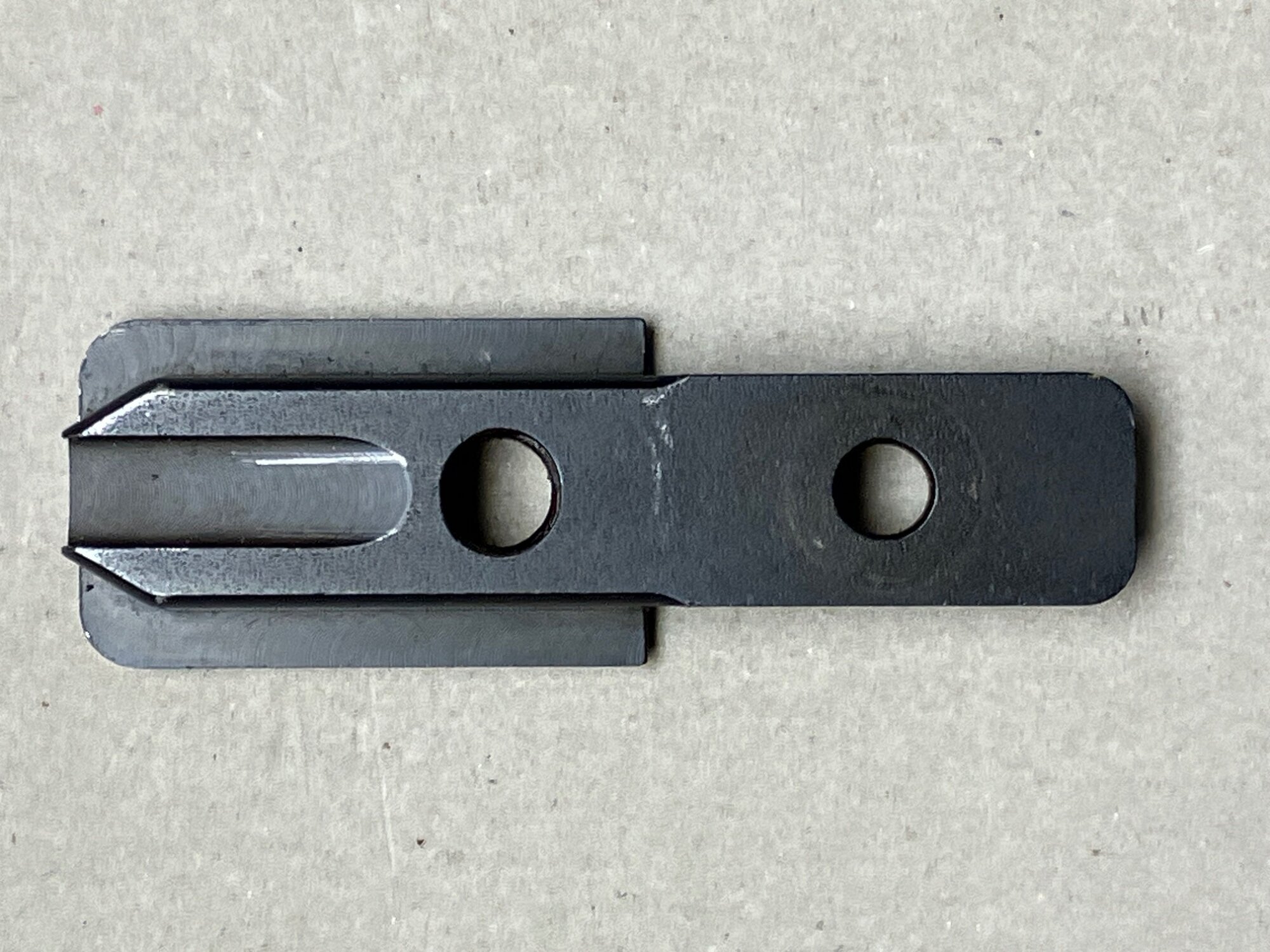
Below is a pic of a Black Dog drum with Merle’s adapter attached to the back. It also has the longer winding slot modification. Below is the adapter itself. As with Merle, we only plan to sell the adapter mounted on a drum.
-
UPDATE: Merle .22 Conversion Kits
TSMG28 replied to TSMG28's topic in Thompson Submachine Gun Message Board
John, I expect your current mags will work with Merle’s kit, since his design is an improvement on the Ciener design. However, the drum adapters are different. They are machined metal mounts designed and produced by Merle that bolt onto a slightly modified Black Dog PPS50 drum so that it locks in place using the normal mag catch. Because this mount partially covers the manual winding slot on the drums, Merle also created the tooling and technique for extending that winding slot. I recovered that tooling and will be able to perform this adjustment in the future. We found a couple of the box mag adapters that you described, but as you noted, those were cut from original Thompson magazines. I will add a pic of the drum mount in the next day or two.